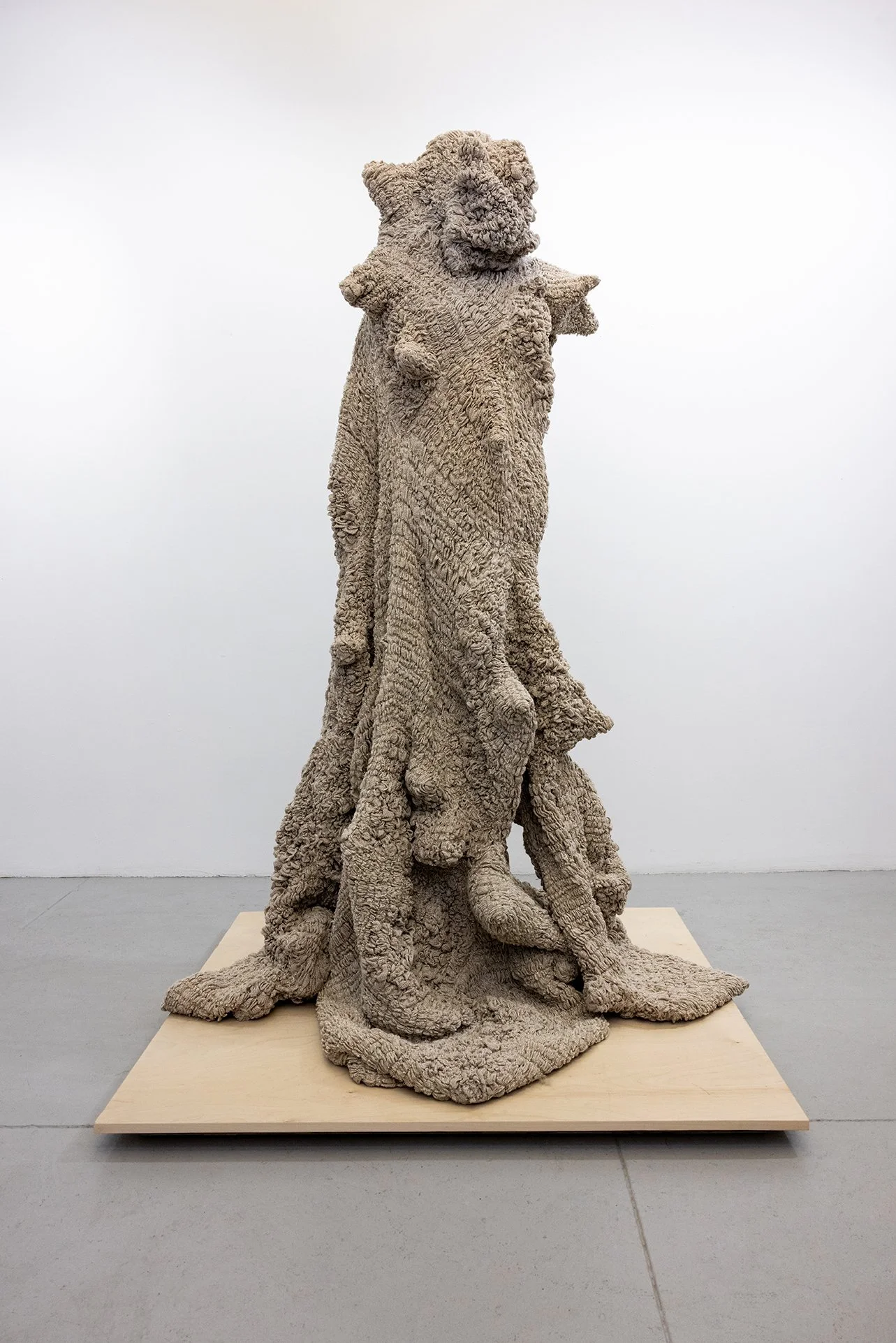
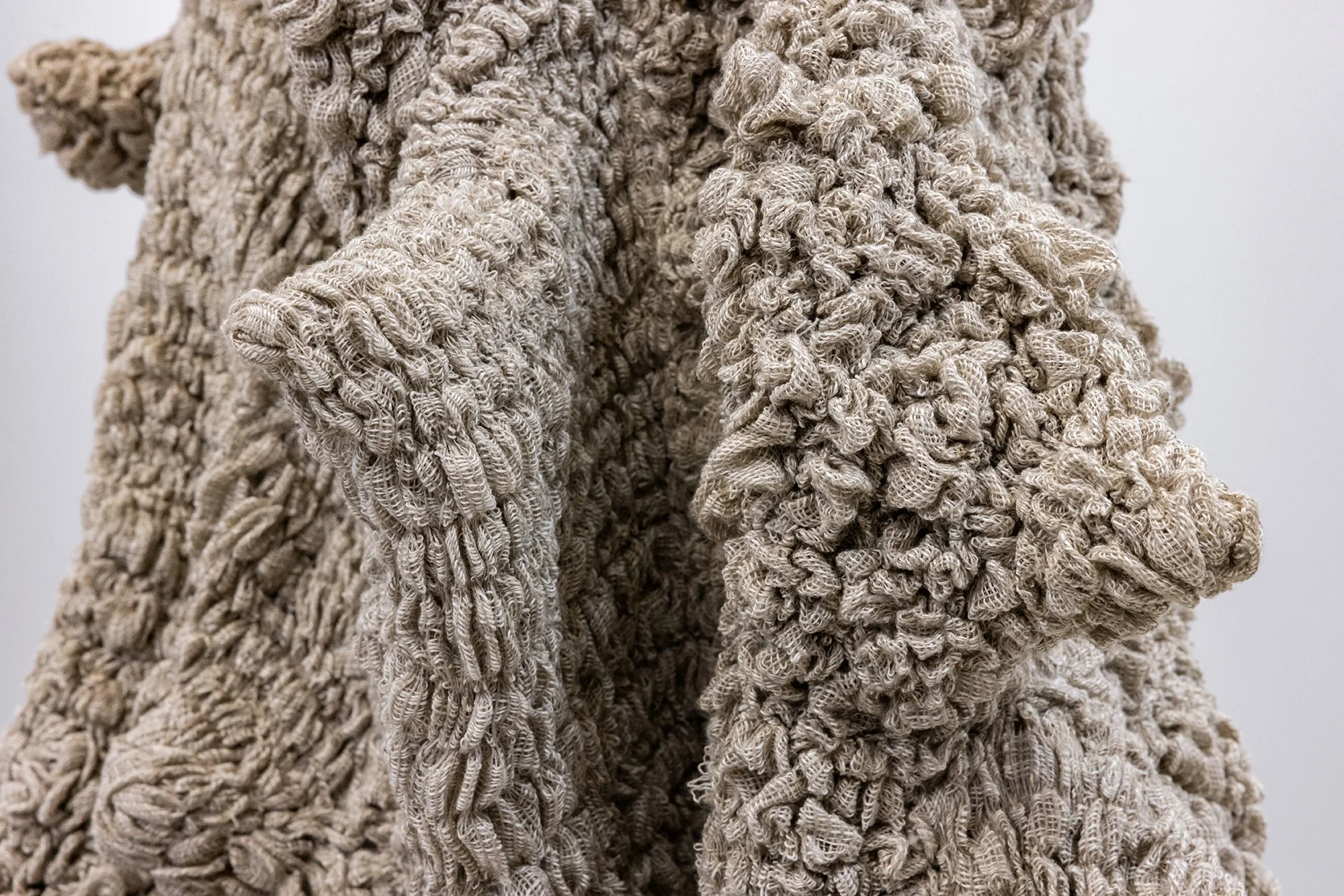
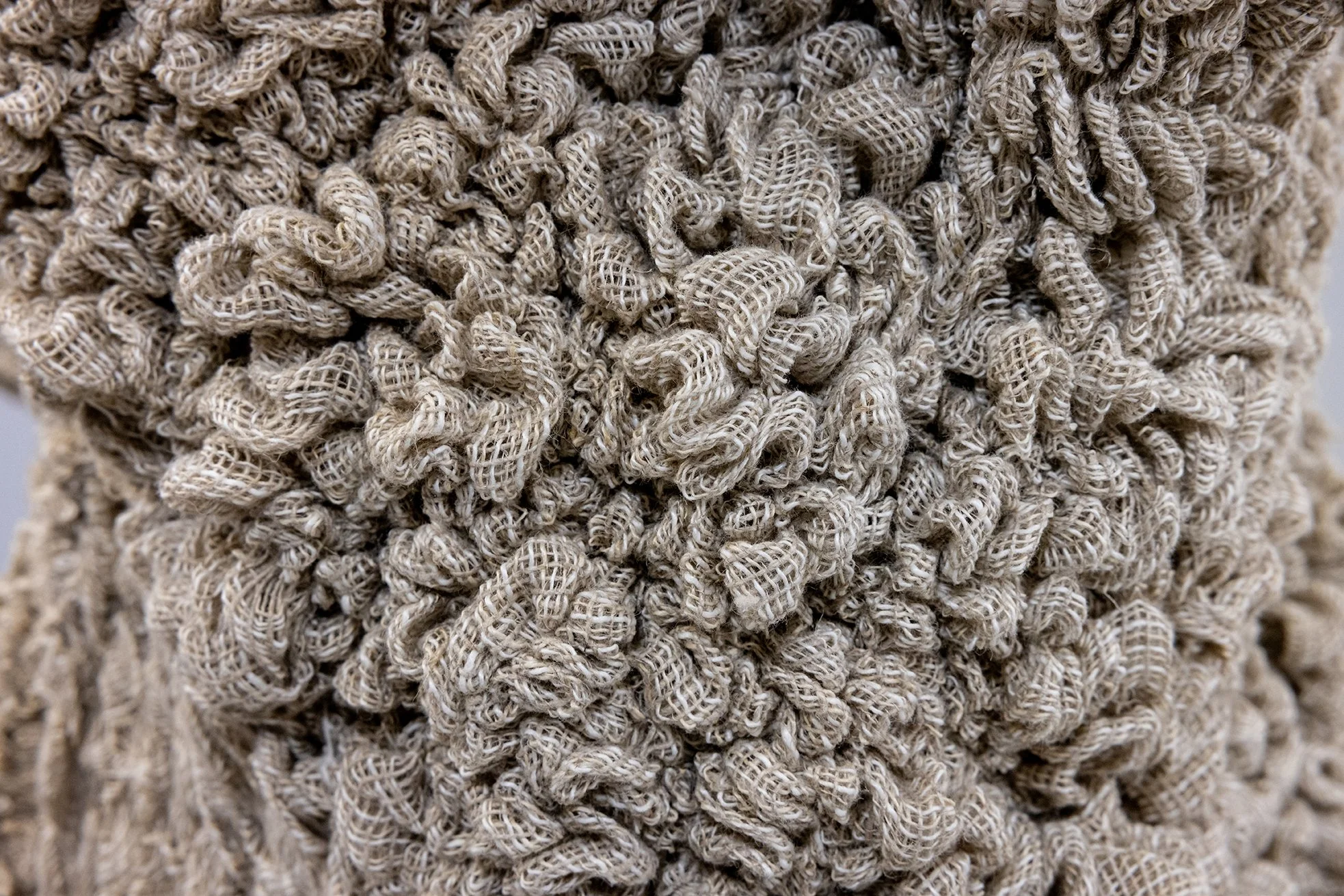
Photo by Walter Wlodarczyk
Landscapes of Belonging #1, 2025
Textural fiber sculpture
Hand-pulled linen threads
40 x 46 x 70 in
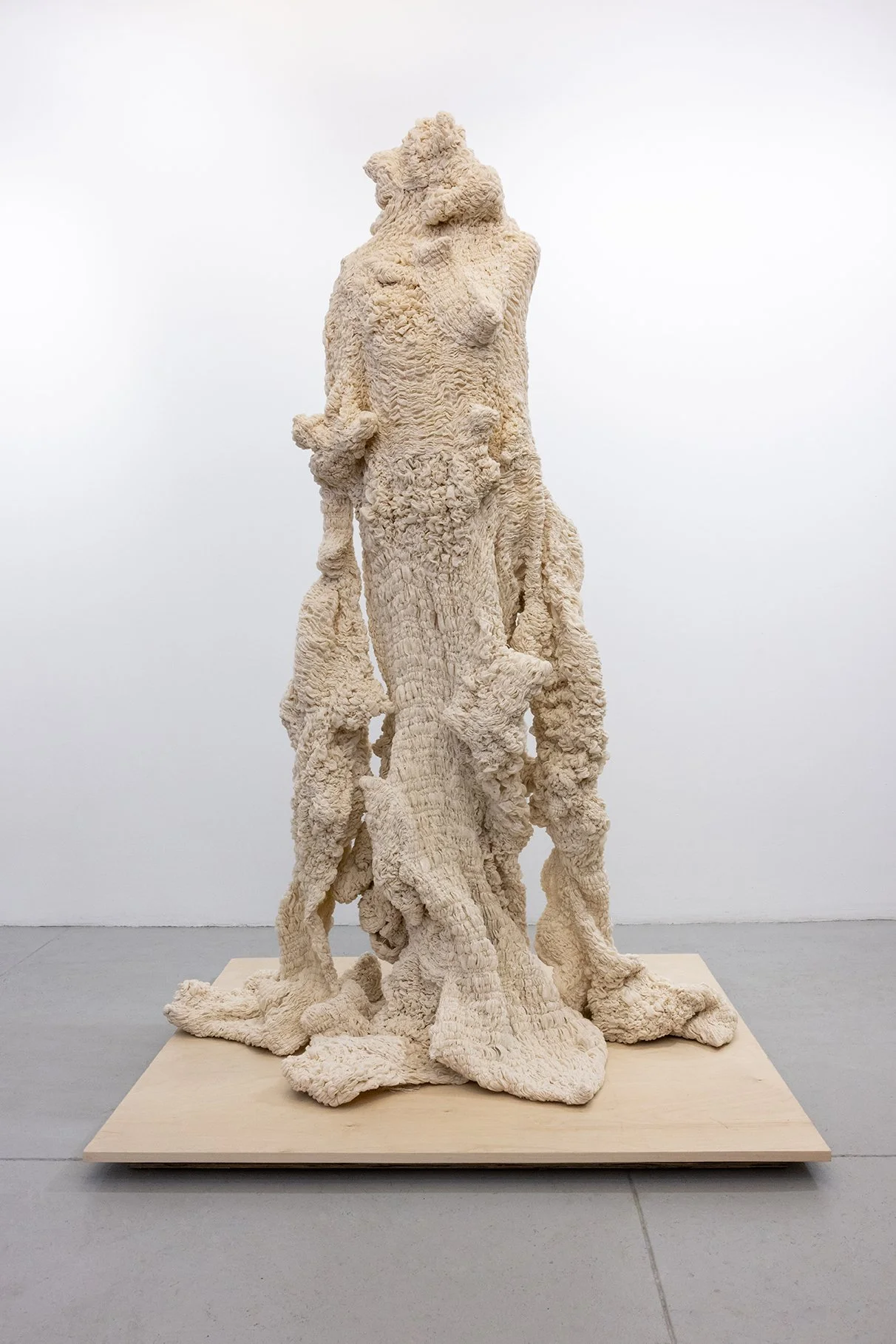
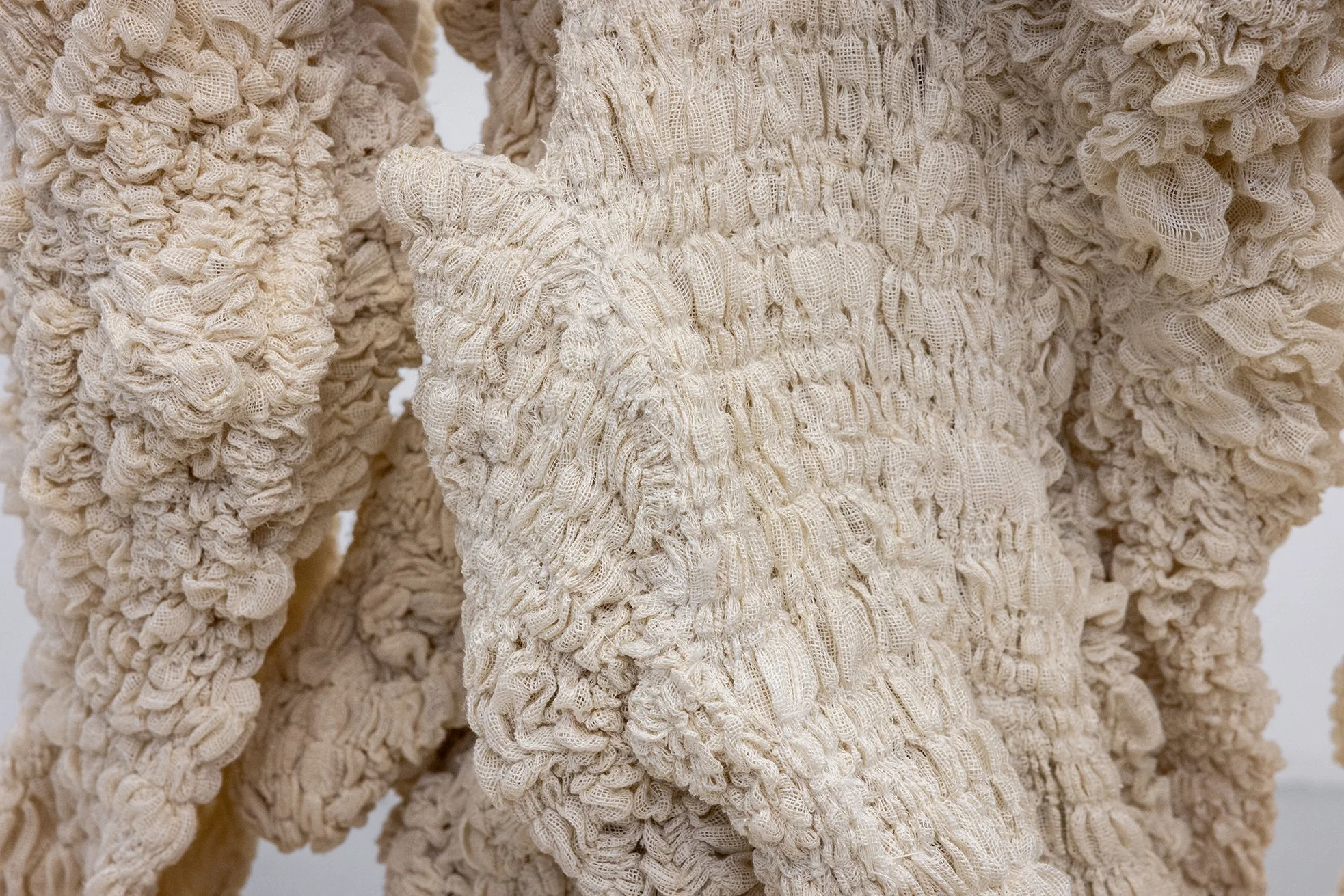
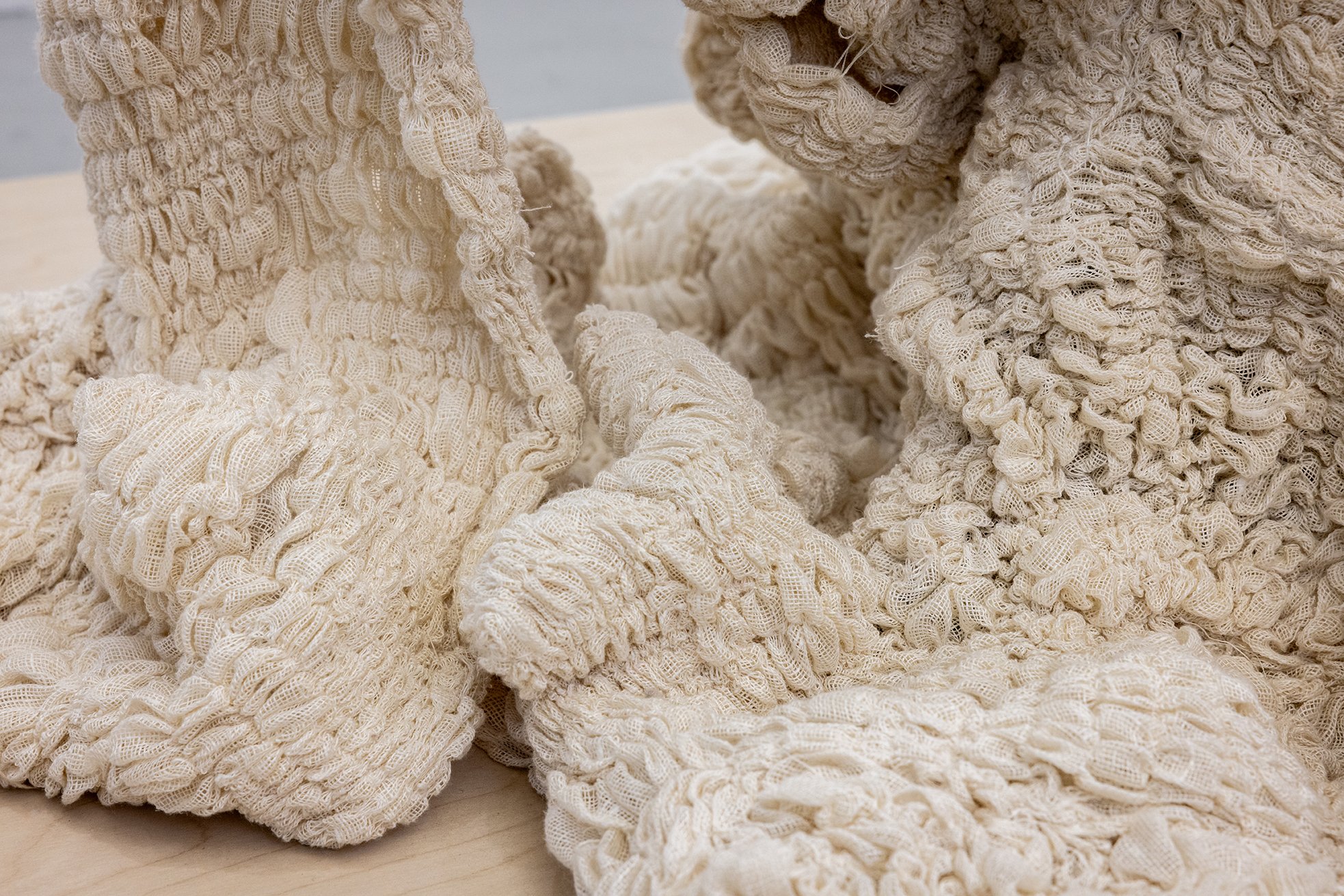
Photo by Walter Wlodarczyk
Landscapes of Belonging #2, 2025
Textural fiber sculpture
Hand-pulled linen threads
40 x 46 x 68 in
Landscapes of Belonging is an ongoing series of large-scale fiber sculptures created through a slow, labor-intensive process of pulling individual linen threads. Through this methodical unraveling, the fabric transforms into a sculptural skin—an expanded body that remembers, reveals, and resists.
Each work begins with an act of undoing. Thread by thread, the textile's structure is destabilized, allowing new forms to emerge: folds, protrusions, cavities, and topographies that evoke the language of flesh. These volumes surface intuitively, shaped by the hand, the repetition of labor, and the subconscious memory of what the body carries. The resulting forms oscillate between skin, landscape, and architecture—revealing a territory shaped by trauma, displacement, and resilience.
Rooted in the artist’s experience as a Cuban woman, immigrant, and person with Cleidocranial Dysplasia (CCD), the sculptures negotiate the tensions between vulnerability and strength. Their surfaces accumulate like scar tissue, mapping the ways bodies—particularly women’s bodies—are touched, altered, medicalized, desired, or misunderstood. By working at a monumental scale, the artist reclaims physical space for a body that has been historically constrained and silenced.
The sculptures stand upright, draped, or cascading onto the floor, conjuring the presence of an absent figure. Though nobody remains inside, its memory is embedded in every thread. Each piece acts as a vessel of endurance—an architecture of survival assembled from rupture, repetition, and repair.
Landscapes of Belonging explores how we inhabit a body marked by migration, loss, and transformation. The works operate as somatic archives, tracing the emotional and physical labor of rebuilding oneself after displacement. As the series expands, it gestures toward a deeper inquiry:
What geographies become possible when the body is reimagined as landscape?